On the morning of October 12, 2025, Tomas Lendvai stood at the Beaver Brook trailhead in Hubbardton, Vermont, in a steady drizzle, and counted four pairs of trail-running shoes lined up on the tailgate of a borrowed Subaru. He had agreed, against his own better instincts, to wear nothing else on rock for six months.
The shoes were ordinary. Two were European, two were American. He bought each pair himself, at retail, from three different shops between Innsbruck and Lebanon, New Hampshire. He did not tell the manufacturers what he was doing.
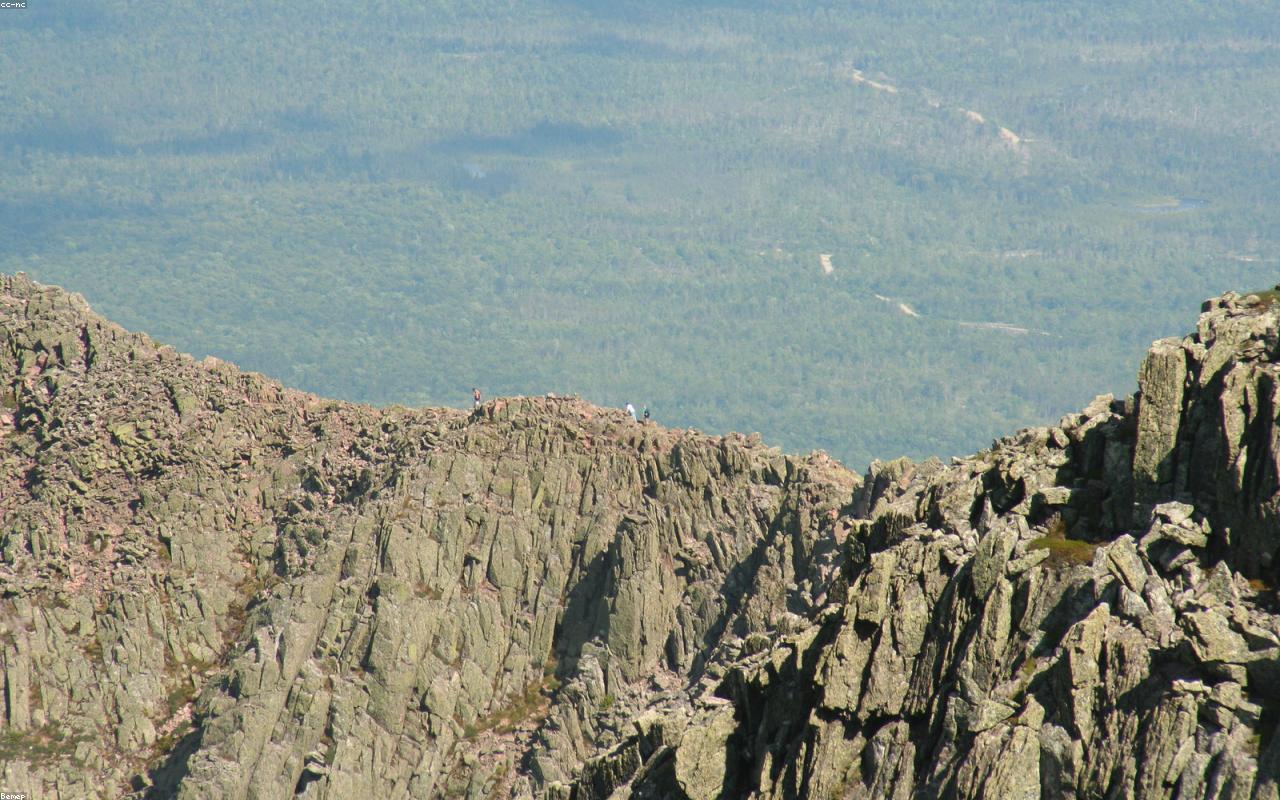
The terrain was the point. New England granite is not the friendly limestone of the Dolomites or the gritstone of the Peak District. It is glacier-polished, often lichen-covered, and after September it is wet most days. The state of Vermont alone records measurable precipitation on roughly 168 days a year. By Lendvai's tally he ran in rain on 41 of his 78 logged sessions.
He chose four shoes that journalists, on launch, had called aggressive: a Saucony Peregrine 14, a La Sportiva Bushido III, a Salomon Speedcross 6, and an Inov-8 Mudtalon Speed. All four sit in the 4 to 6 mm drop range. All four advertise lugs over 4 mm. All four promise grip on wet surfaces.
The test was simple. He ran the same 11.4 km loop, beginning at Beaver Brook and crossing the long slab section above Sunrise Pond, in each pair, on weeks when the weather behaved. He logged falls, near-falls, lug wear in millimetres, and the condition of the heel counter at the end of each month.
The Saucony went first. By week six the medial lugs at the forefoot were rounded enough that on the slab below the second cairn, Lendvai stepped down and his foot continued for another forty centimetres before stopping. He caught himself on a beech sapling and bruised his sternum on his GPS watch. He retired the shoe at 312 km.
The Salomon outlasted it but compromised in a different way. The Contagrip TA rubber held on wet rock longer than the Saucony's PWRTRAC, but the upper, a soft welded mesh, tore at the medial midfoot at 410 km. By month four, water entered the shoe within the first twenty metres of any wet trail. Lendvai accepted this and ran the rest of the test with wet feet on those days.
The La Sportiva Bushido III was the surprise. It is not marketed as a mud shoe. Its lugs are short, 3.5 mm at the deepest, and its FriXion XF 2.0 rubber is harder than the rest. Lendvai had not expected it to do well on wet leaf litter, which is the secret problem of New England trail running between October and December.
And yet it did. The hard rubber, paired with the narrow forefoot and the relatively stiff EVA midsole, transmitted enough feedback that he could feel the rock through the shoe and correct his foot placement mid-step. On the polished granite slab below Sunrise Pond he fell once in 24 attempts. The Saucony, by comparison, had been three falls in eight.
The Inov-8 was the muddler. Its lugs are tall, 6 mm at the rear, and made of a soft sticky rubber that the company calls Graphene Grip. On bare rock it grabbed admirably. In mud it self-cleared. But the lugs themselves chunked off, two at a time, beginning around 180 km, and by the end of the test the shoe looked like a poorly groomed dog. It still ran. It did not run elegantly.
Lendvai weighed each pair on a kitchen scale before and after the test. Average weight gained from compressed midsole and embedded grit was 38 grams. The Salomon gained 71 grams, almost all of it water held in the upper. The Bushido gained 19.
On the morning of April 4, 2026, in the same drizzle, he ran the loop one final time in each pair, in sequence. The Bushido was fastest by four minutes over the Saucony, which on fresh rubber had been the quickest at the start.
What this tells the prospective buyer is something the marketing copy will not. On wet polished rock the soft, deep-lugged shoes that look the part are often the wrong tool. The lug is doing less work than the rubber compound and the midsole stiffness. A narrow stiff shoe with hard rubber, properly fitted, will out-grip a soft squishy one over a season.
There are limits. In deep slop, on a wet pasture crossing in late March, the Bushido is useless. The Mudtalon is the right shoe and there is no substitute. Tools for tasks.
Lendvai also notes, with some hesitation, that none of these shoes are built for the heel-strike of a tired hiker descending a slab at the end of a long day. They are running shoes. A heavy approach shoe, the sort the European Alpine clubs still recommend, would have held up better but would have made the climbs miserable.
The cost of the test, in shoes, was 632 euros. He has kept the Bushidos for a planned summer in the Stubai and donated the Salomons to a friend who runs on softer ground.
On the question of whether one needs four pairs of trail-running shoes, Lendvai would say no. On the question of whether the shoe matters on wet New England rock, he is now sure that it does. The right shoe will not save a careless runner. The wrong shoe will hurt a careful one.
Field Lantern will revisit these models, and the broader category, in autumn 2026. For now Lendvai is back in the Stubai, in boots.