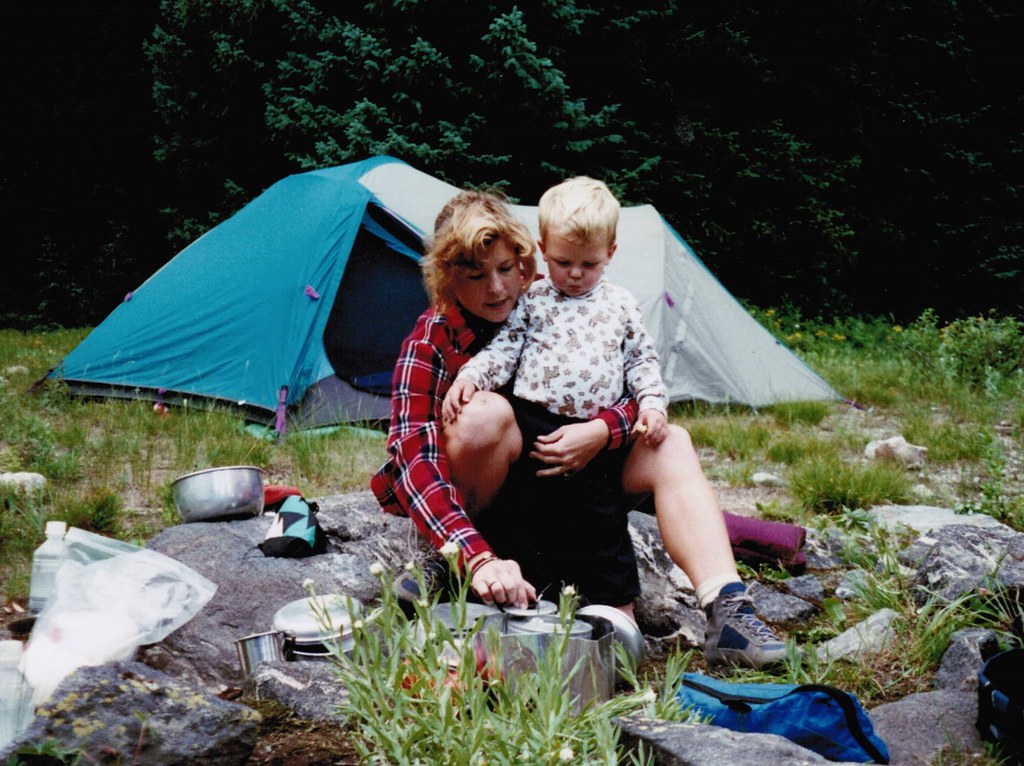
On May 18, 2026, at a snow-margin camp above Hidden Lake Lookout in the North Cascades, Wendell Foss boiled half a litre of water in a tin pot over an alcohol stove that cost him fourteen dollars at a hardware store in Marblemount. The stove took nine minutes and twelve seconds. The wind was steady at perhaps eight kilometres an hour. He timed it twice and got the same result.
He had carried, on that twelve-day shoulder-season trip, four stove systems. An MSR PocketRocket Deluxe canister, a Trangia alcohol burner with a small windscreen, an MSR WhisperLite International liquid-fuel stove with a 11 ounce bottle, and a Soto WindMaster canister with a four-prong pot support.
The brief was simple. He would carry each stove on a different day and use it for breakfast and dinner. He would log boil times, fuel consumed by weight, wind conditions, and a subjective rating of how it felt to use the stove on a cold morning with stiff hands.
The numbers, after twelve days, are not what the gear forums would lead a reader to expect.
The Soto WindMaster, on a windy morning at 5,200 feet with the temperature at 1C, boiled half a litre in three minutes and eleven seconds. The PocketRocket Deluxe, in the same conditions on a different morning, took four minutes and two seconds. The WhisperLite took three minutes and forty-eight seconds, but required two minutes of priming first. The Trangia alcohol burner took, in cold wind, between eight and twelve minutes depending on the day.
On fuel weight per boil, the WindMaster used 7.4 grams of isobutane per half litre. The PocketRocket used 8.2. The WhisperLite used 9.1 grams of white gas. The Trangia used 14.5 grams of denatured alcohol.
For a four-day trip at two boils per day, this comes out to about 60 grams of canister fuel for the WindMaster against 116 grams of alcohol for the Trangia. The canister and stove together still weigh less than the alcohol kit because alcohol is heavier per useful joule.
What the numbers do not capture is the stove-as-experience. The WhisperLite, with its priming ritual and its faint odour of unburned white gas, asks the user to wake up before cooking. The PocketRocket asks nothing. The Trangia asks patience. The WindMaster asks for a steady hand and a windscreen.
Foss, who is past fifty, prefers a stove that asks something of him. He found himself reaching for the WhisperLite on cold mornings even when the canister stoves were available, because the priming flame warmed his hands and the rhythm of the stove matched the rhythm of waking up.
This is not a recommendation. It is an observation. The right stove for a young thru-hiker working a twenty-five mile day is not the right stove for a former ranger with arthritic knuckles and a habit of sitting on a log to watch the morning.
On reliability, the WhisperLite is the obvious winner over a multi-decade time horizon. It can be repaired in the field with a small kit that weighs 28 grams. The canister stoves cannot. Foss has watched two canister stoves fail at altitude in cold conditions over the course of his career, both with stuck valves. Neither could be fixed in the field.
The canister stoves win, however, on simplicity at the moment of use. There is no priming. There is no spilled fuel. A cold tired hiker can light a canister stove with one match and a working thumb. This counts for something at the end of a long day.
The Trangia, the cheapest and heaviest of the four, is the stove Foss kept reaching for at higher elevations once temperatures dropped to near freezing overnight. Alcohol, unlike canister fuel, does not depressurize in cold. It also does not flare. It burns at a known rate.
At Cascade Pass on the seventh evening, in still air and 0C, the Trangia boiled half a litre in seven minutes and twenty-four seconds. The PocketRocket, with a half-spent canister, took six minutes and ten. The margin had narrowed. A fresh canister would have closed it further but Foss had carried only what he carried.
On the question of fire risk, alcohol stoves should be treated with more respect than canister stoves. The flame is hard to see in daylight and the stove remains hot for several minutes after the flame has died. Foss knocked over a Trangia in a tent vestibule in 2014 and was lucky.
For most North American shoulder-season backpacking the Soto WindMaster, at 87 grams without canister or pot support, is the right stove. It is fast. It is efficient. It tolerates wind. It is not romantic.
The WhisperLite remains the right stove for long expeditions, extreme cold, and trips where fuel must be carried in a non-pressurized container. The Trangia remains the right stove for a person who likes alcohol stoves.
Foss came home with seven grams of fuel remaining in his last canister and a vague intention to put the WhisperLite back in storage. He has not yet done so.
Filed under