On the morning of November 4, 2025, Imogen Reece arrived at the trailhead for the Hoh River Trail on the western edge of the Olympic Peninsula with five rain shells in a tote bag in the back of a rental Forester. She had borrowed the jackets from a small lending library at a Seattle outdoor shop, on the understanding that she would write up what happened to them.
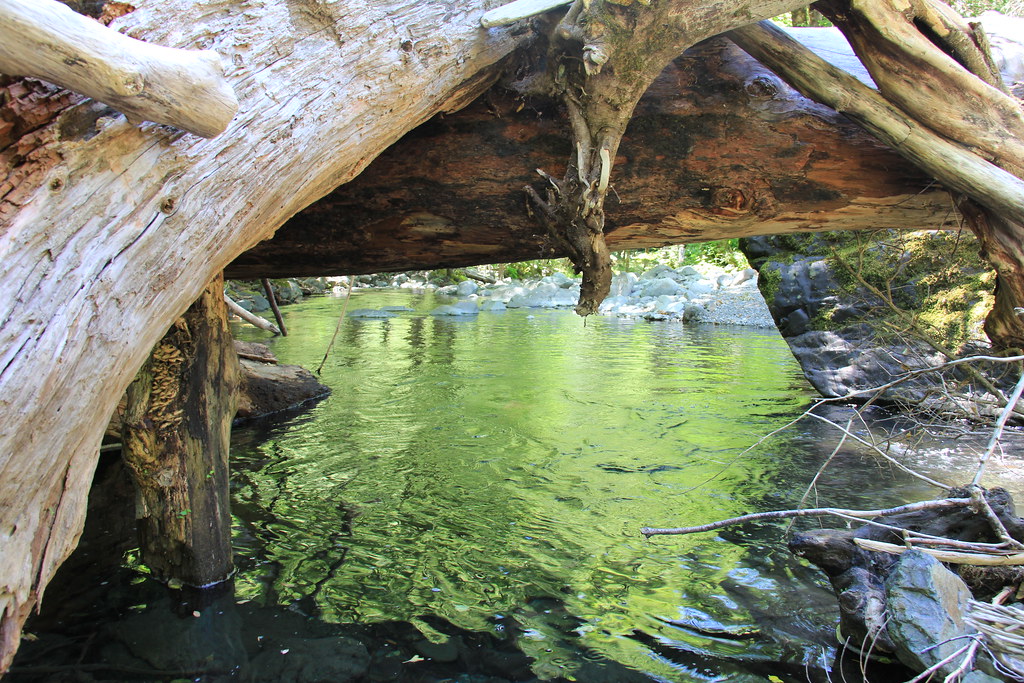
The Pacific Northwest is the right place for this test. The Hoh receives roughly 3.6 metres of rain a year. The town of Forks, fifteen miles north, is one of the wettest inhabited places in the contiguous United States. Between November and April, a jacket here is doing real work most days.
The jackets were an Arc'teryx Beta Lightweight in three-layer Gore-Tex, a Patagonia Triolet in Gore-Tex Pro, an Outdoor Research Foray III in Pertex Shield, a Montane Phase XPD in Gore-Tex Pro, and a Rab Kangri GTX, also Gore-Tex Pro. Three of them were on their second or third season with previous testers. Two were new.
Reece logged each day she wore a jacket in measurable rain: the duration of the wear, the intensity of the rain, whether she remained dry, and at what point she became wet. She also logged what she called perceived breathability, which is a subjective measure but, after enough hours, an honest one.
By April 12, 2026, she had logged 62 days of wear. Three jackets had developed water ingress that was unambiguously a failure rather than condensation. Two had not. One of the latter was not the jacket she expected.
The Outdoor Research Foray III, the cheapest of the lot, failed first. On December 18, in steady rain on a six-hour outing along the South Fork Hoh, the Pertex Shield face fabric began to wet out at the shoulders. By the third hour the inner liner felt damp to the touch. By the fifth the membrane was clearly transmitting water.
This is, to be fair, what happens to most cheaper face fabrics after a season of use, particularly in this region. Pertex Shield is honest about being a less durable construction than Gore-Tex Pro and is priced accordingly. Reece does not consider this an unfair test. She does consider the Foray III not the right jacket for the western Olympic Peninsula.
The Montane Phase XPD lasted longer but failed more confusingly. The Gore-Tex Pro fabric remained dry to the touch. The pit zips, however, leaked at the upper end of the zipper where the storm flap was poorly stitched. Reece returned the jacket to the lending library with a note. She does not know whether her sample was representative or a single bad garment.
The Patagonia Triolet, on its third season with previous testers, behaved as the marketing copy would suggest. It kept her dry on every outing. The face fabric, however, had begun to delaminate near the hood lining, which is a known failure mode of older Gore-Tex Pro and is not unique to Patagonia. The jacket will not see a fourth season.
The Arc'teryx Beta Lightweight, the most expensive of the new jackets, kept her dry through all 62 days. Its face fabric showed no signs of wear. Its zippers ran smoothly. Its hood, the small detail that ruins or makes a hardshell, fit closely without obstructing peripheral vision.
The Rab Kangri GTX is the surprise. It is the heaviest of the test, at 540 grams in a women's medium. It is not glamorous. The face fabric is a 80-denier Gore-Tex Pro that the marketing describes, in unusually plain language, as built to last. After 62 days of wear, including several near-storm days, the Kangri showed no signs of compromise. Reece liked the way the cuffs were finished. She liked, more importantly, that she did not have to think about the jacket while wearing it.
On breathability, the lightweight Arc'teryx did the best, with the caveat that breathability is partly a function of weight and the Kangri carries more fabric to ventilate. On a steep climb out of the Quinault valley in early March, in 4C and steady rain, the Arc'teryx was noticeably drier inside than the Kangri.
The breathability question, however, is also a question of fit and ventilation. The Foray, before it failed, was the most breathable of the group, in part because its pit zips were the longest and the easiest to operate.
On price, the spread is real. The Foray retails for around 235 dollars. The Kangri is roughly 525. The Arc'teryx Beta Lightweight is 600. For a hiker who walks in the Pacific Northwest most weekends, the difference of 250 dollars between the Kangri and the Arc'teryx is, over a five-year lifespan, perhaps the cheapest five years of dry walking available.
For a hiker who walks twice a year in the rain, the Foray is more than enough. The test was not fair to it. It is a jacket for the Sierra in October, not the Olympics in January.
Reece will keep, for her own use, the Rab Kangri GTX. The Arc'teryx is going back to the lending library for another tester. The Patagonia, the Montane, and the Outdoor Research will be retired from the test pool.
There is no triumphant ending to a hardshell review. The right jacket, in this country, is the one that does not fail you when you are six miles from the car and the rain has not stopped since Tuesday. That is, in the end, the only test that matters.