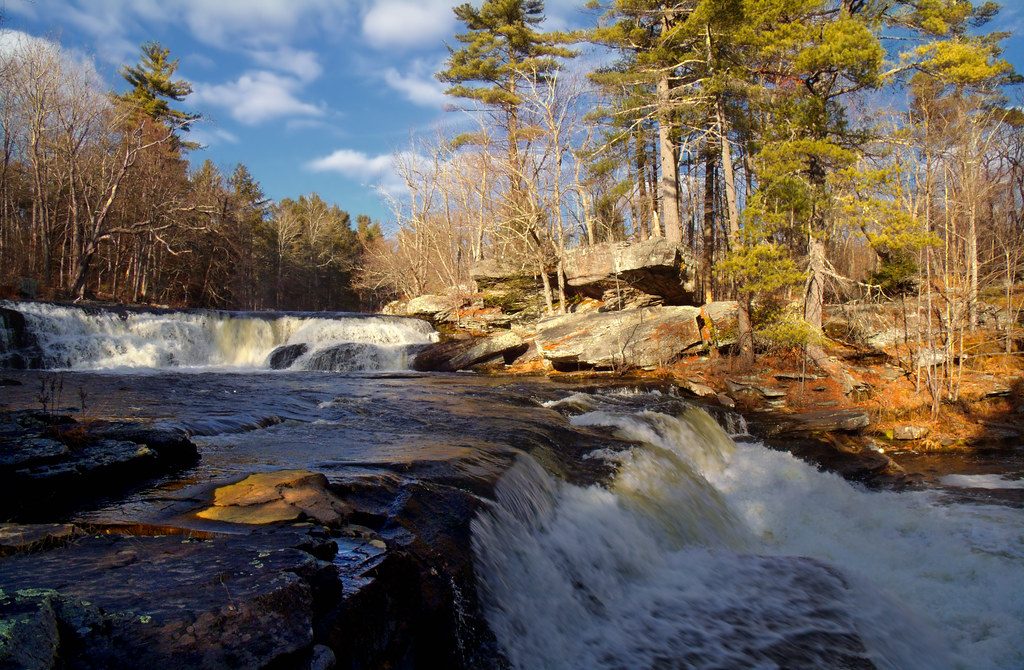
The Hollyford River on the West Coast of New Zealand's South Island runs grey-green in autumn with the snowmelt from the Darran Mountains and the steady rain that falls on the western flank of the divide for nine months of the year.
On the morning of the fourteenth of April, Imogen Reece stood on its eastern bank, twelve kilometres up from the road end at the start of the Hollyford Track, and asked herself three questions she has asked at every river crossing for the last fifteen years.
The first question is whether she has to cross at all.
It sounds trivial. It is not. New Zealand has the highest rate of backcountry drowning deaths per capita in the developed world, and the official investigations into those deaths return again and again to a single finding: the person who drowned could have turned around, walked upstream, taken a footbridge, waited a day for the river to drop, or rerouted entirely.
Reece had a Plan B that morning. She could turn around. She could walk the eight kilometres back to a swing bridge, cross there, and add a day to the trip on the western bank. She had food for the extra day. She had time. She had nowhere she needed to be.
The first question was answered no, she did not have to cross here. Which meant she needed unusually strong reasons to.
The second question is whether the crossing is feasible.
This is where most of the assessment lives. She looked at the river. She walked fifty metres upstream and fifty metres down, evaluating each potential crossing line for depth, current speed, bottom composition, and downstream consequence.
Depth she estimated by watching debris float past — a small branch sat low in the water in the channel, suggesting the bottom there was at least chest-deep on her. Closer to the gravel bar on her side it would be thigh-deep at most.
Current speed she estimated by counting seconds against floating leaves over a known distance. The leaves cleared a fifteen-metre stretch in about nine seconds. Fast, but not catastrophic.
Bottom composition she could only guess at. The water was too cloudy with sediment to see. She picked a line where she could see broken cobble on the bank in line with the crossing, suggesting the bed beneath was similar.
Downstream consequence is the question almost no one asks and the question that decides most fatalities. If she lost her footing and was swept downstream, what would happen? She walked twenty metres down the bank and looked. A bend, with a fallen tree partly in the water on the far side. Strainer hazard. Significant.
She moved her crossing line another forty metres upstream until the downstream view was clear of strainers for at least a hundred metres.
The second question was answered yes, feasible, with the line she had now chosen.
The third question is whether she is the right person to attempt it.
Reece is forty-six years old, has crossed perhaps four hundred New Zealand rivers in her working life, knows the river-mutual-support method and the pole technique and the pack-on-pack-off debate. She was not particularly tired. She had eaten a real breakfast. She was wearing boots she trusted.
She was also alone, which mattered. The strongest crossing techniques in the New Zealand outdoor curriculum assume a party of two or more. A solo crossing has no margin if something goes wrong.
She thought about this for several minutes. The crossing she had identified was within her solo capacity. It was not at the edge of it. If the river had been a hand higher, or the current a step faster, she would have turned around. As it was, she judged the risk acceptable.
The third question was answered yes.
She crossed at nine eighteen. Pack on, hipbelt unbuckled, sternum strap unclipped. Trekking poles in both hands, planted upstream, leaning into the current. Eyes on the far bank, not the water. Feet shuffling sideways, never crossing one over the other.
The water came to mid-thigh at the deepest point. The current pushed hard against her downstream pole and harder against her downstream leg. She kept moving, slowly, in the rhythm of plant-shuffle-shuffle-plant that has become as automatic to her as walking.
She reached the far bank at nine twenty-one. Three minutes. She sat down on the gravel, took off her wet socks, wrung them out, and put them back on.
The crossing itself, she would say later, was the smallest part of the work. The work was the twenty minutes of assessment on the bank before it. The work was the willingness, demonstrated by a long history of turning around at other rivers in other years, to mean it when she asked the first question.
She walked on up the Hollyford Valley toward Lake Alabaster, the river behind her, the rain just beginning to start again over the Darran Mountains to the north.