On June 22, 2024, on the south ridge of Mt. Le Conte in the Smokies, a party of three reached a saddle at 10:45 in the morning. The summit was an hour above them. A wall of cumulus that had been thirty miles to the west at nine was now ten miles away and visibly building. The lead walker, a woman named Jessamine Carter, looked at her watch, looked at the cloud, said one word that is unprintable here, and turned the group around.
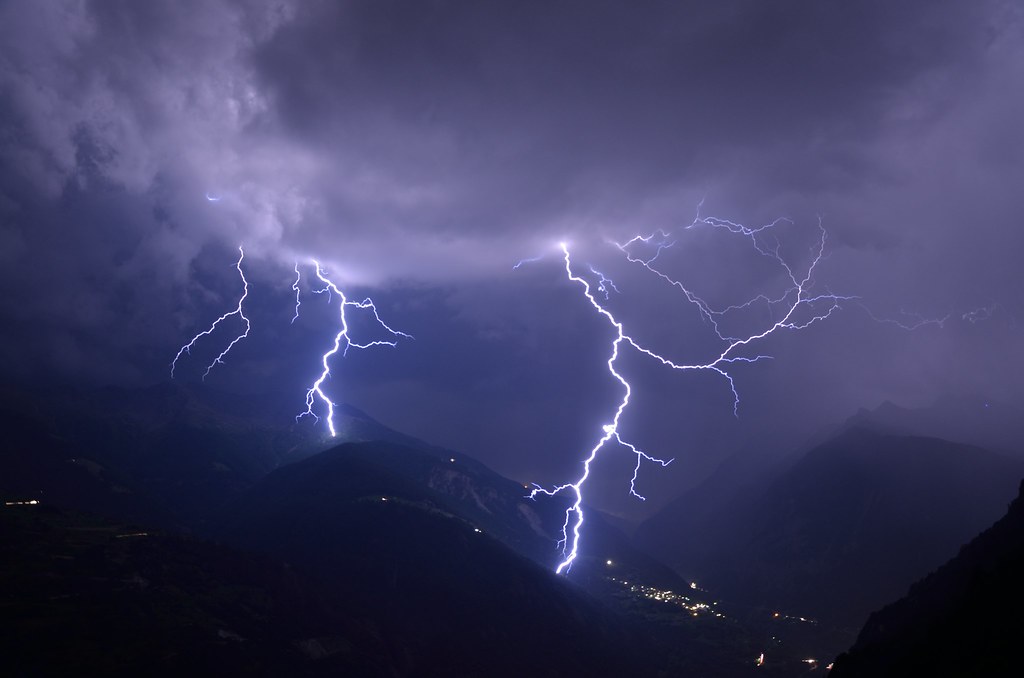
Forty minutes later, descending through Alum Cave, they heard the first thunder. By the time they reached the car at one, lightning was striking the ridge they had stood on at quarter to eleven.
The decision to bail is, in the literature of mountain accidents, almost always made too late. After the fact, in the investigation, there is a moment that everyone present can identify as the moment the decision should have been made. There is rarely anyone who made it then.
The reasons are well documented. Mountain medicine calls the phenomenon summit fever, and the academic literature on it is unkind. It is a cognitive bias produced by sunk cost. The further into a day a walker has gone, the more the brain weights the work already done and the less it weights the work remaining. The summit, once visible, exerts a magnetic pull disproportionate to its actual value.
There are also social pressures. A party of four with one strong walker and three less-experienced companions will turn back later than any of them would have turned back alone. No one wants to be the person who suggested it. The strong walker waits because the others have not asked. The others wait because they assume the strong walker knows something they do not. Nobody knows anything. They are simply standing in the wrong place.
The discipline of turning around is best installed in advance, not in the moment. A walker who has decided at the trailhead what conditions will end the day is far more likely to honour the decision than a walker who is trying to assess conditions in real time at altitude with cold hands and a tired brain.
A useful framework is the turnaround triad: a time, a weather observation, and a personal condition. The walker writes them down. Any one of them, met or exceeded, ends the upward portion of the day.
The time is the simplest. For a thunderstorm-prone summer day in the Southern Appalachians or the Rockies, a noon turnaround is a common discipline. For a long ridge traverse in the Alps, a one or two p.m. turnaround is more typical. The exact hour matters less than the fact of having one.
The weather observation is range-specific. In summer in the Rockies, the standard one is the appearance of a towering cumulus with a hard cauliflower top. In winter in the Cairngorms, it is a wind speed at the summit exceeding the speed at which the walker can stand comfortably. In spring on the British hills, it is steady rain at an air temperature below ten degrees with no immediate prospect of clearing.
The personal condition is the most often ignored. It is the question: is anyone in the party noticeably worse off than they were two hours ago. Not tired. Not cold. Worse. Slower. Quieter. Stumbling. A walker who has stopped joining the conversation has often stopped functioning properly, and the brain that should be raising the alarm is the one most affected.
Once the decision is made, it should be made cleanly. The party turns. They do not argue. They do not bargain for ten more minutes. Ten more minutes is the bargain that has killed more competent walkers than any single piece of bad weather.
The descent after a bail is its own discipline. It is tempting to hurry. Hurrying is when ankles roll, when packs swing wide on switchbacks, when the walker who turned around at quarter to eleven is the walker who breaks a wrist at quarter past. The pace down should be deliberate, slightly slower than the pace up, with eyes on feet and not on the gathering sky.
It is worth noting what bail does not mean. It does not mean failure. The vocabulary in many guidebooks treats the summit as the only legitimate destination, and this vocabulary has done more damage than any single weather forecast. A day that ends three hundred metres short of a summit because the cloud was building is not a failed day. It is a day that produced its most important outcome: everyone went home.
The party on Le Conte returned to the trailhead, drove into Gatlinburg, and ate at a barbecue place. They went back the following weekend and reached the summit in three hours under a clear sky. The summit was no different from the summit they would have stood on the previous Saturday. The week of waiting cost them nothing.
There is a small literature of summit turnarounds that deserves attention. Ed Viesturs, the American Himalayan climber, has written that he turned back from the summit of K2 on his first attempt because the snow felt wrong and the weather did not look right. He summited later. The line he repeats, in interviews and lectures, is that the mountain decides when a climber can stand on top of it, not the other way around.
For the day walker on a county ridge, the principle is the same. The hill grants summits under conditions of its own choosing. A walker who accepts this, and who builds turnaround discipline into the day in advance, is a walker who will be walking for many more decades than one who treats every outing as a transaction in which a summit is owed.
The hardest part of the discipline is honouring it when nothing dramatic happens afterward. A party turns at eleven because of a cloud. The storm does not materialise. They reach the car under clear sky. The temptation is to file the day as a mistake. It is not.
Turnaround discipline is, by design, a system that is sometimes wrong in one direction. The wrongness in that direction costs a walker a few hours and a summit. The wrongness in the other direction can cost considerably more.
Margaret Holcomb has guided in the Smokies, the Whites, and the Sierra. She has turned around from many summits and made it to the top of most of them eventually.