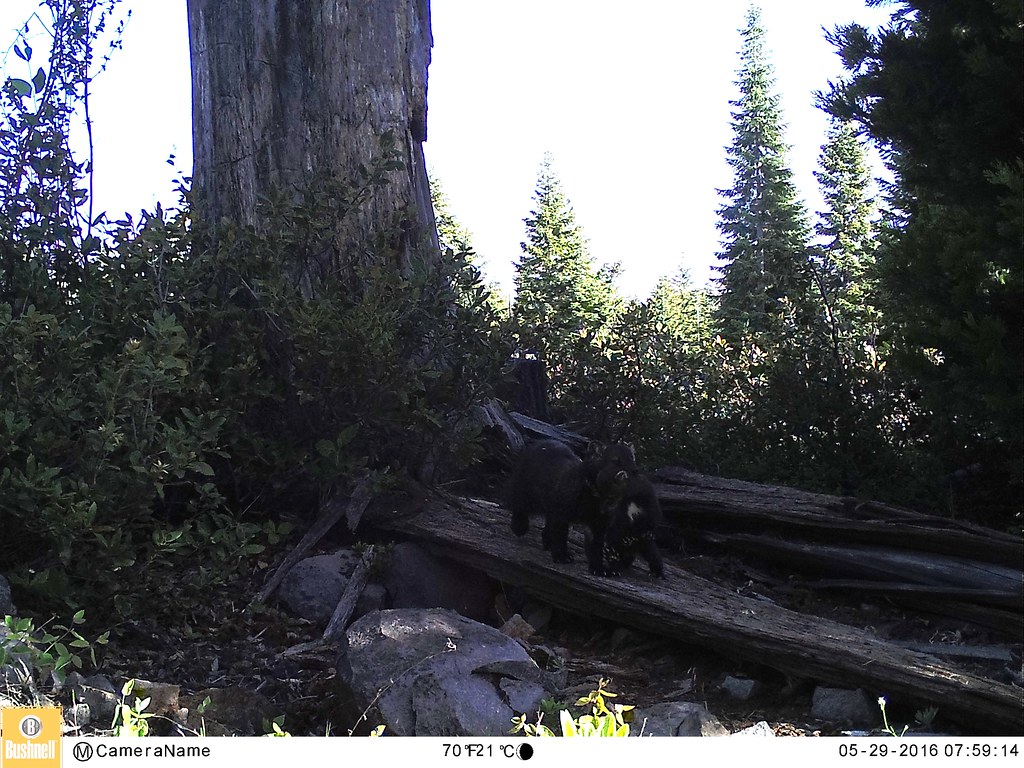
On the morning of April 8, Vermont Fish and Wildlife biologist Hannah Ledoux climbed into a hemlock above a beaver flowage west of Stratton and confirmed what a remote camera had suggested two weeks earlier. Inside a cavity twenty-two feet up the trunk, a female fisher had given birth to three kits.
It was the first documented fisher den in the southern Green Mountains since 1986.
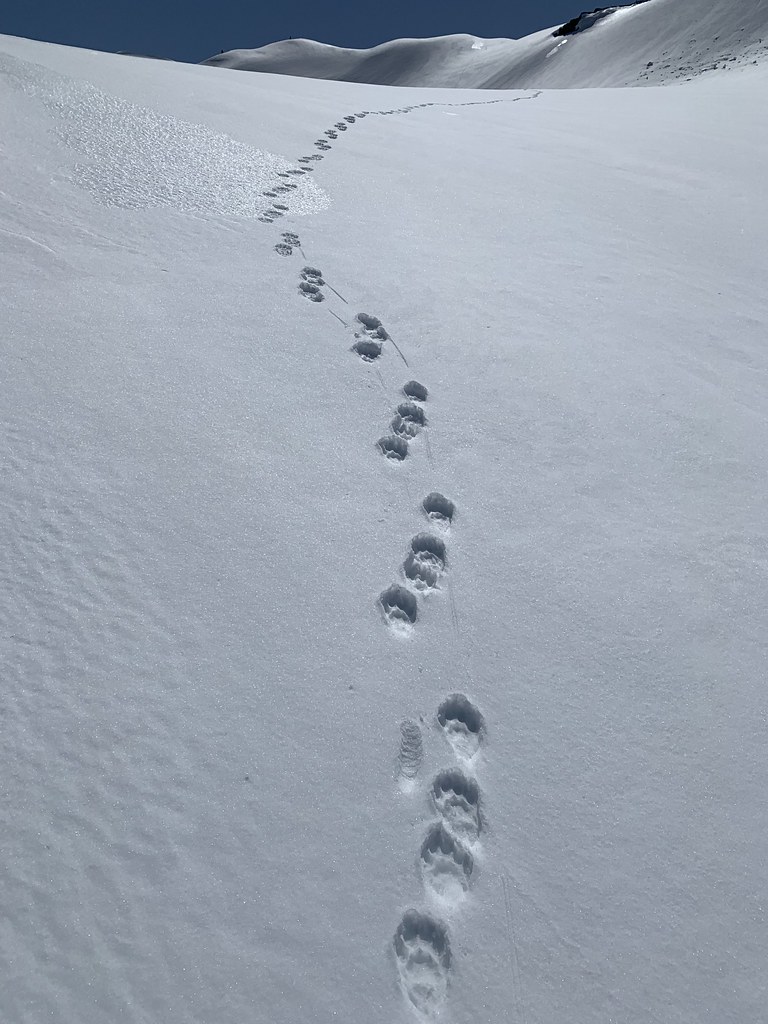
Fishers, Pekania pennanti, are large mustelids, weighing seven to thirteen pounds, with dark brown fur and a long bushy tail. They are solitary, secretive, and almost entirely arboreal in their hunting habits. They are one of the few predators that will routinely take porcupines.
They were largely extirpated from southern Vermont by 1930, the casualty of a fur trade that ran ahead of any regulation, combined with the near-total clearing of the state's forests for sheep pasture in the nineteenth century. As the forests grew back through the twentieth century, fishers returned to the northern half of the state on their own.
The south, separated by Route 4 and a long band of dairy country, never recolonized naturally. The current reintroduction project began in 2021 with the transfer of fourteen animals from northern New Hampshire.
Ledoux, thirty-one, has worked on the project since its second year. She holds a master's in wildlife biology from the University of Vermont and a side certification in tree climbing that she earned specifically for this work.
The den check on April 8 required her to ascend the hemlock on spurs, in a harness, with a small inspection camera on a flexible boom. The female fisher, designated F-04 in project records, had been collared and released near Stratton in October 2024. Her movements over the winter had suggested denning behavior beginning in early March.
Ledoux's inspection took six minutes. She did not enter the cavity. The boom camera produced a brief, low-resolution video of three kits, eyes still closed, piled together in a depression of shredded hemlock bark.
She descended carefully. At the base of the tree she sat for a moment without speaking, then opened her notebook and wrote down the date, the time, and a single sentence: "Three confirmed kits, F-04, Stratton hemlock site."
The project's design is modest. Fourteen animals were released across the first two years, ten more across the second two. The target population is forty breeding adults across roughly 450 square miles of contiguous forest from Stratton south to the Massachusetts line.
The forest in question is largely owned by the Green Mountain National Forest, with smaller parcels held by the state, by The Nature Conservancy, and by a scatter of long-tenure family woodlots. The project has spent nearly as much effort on landowner conversations as on the animals themselves.
"You can do all the biology you want," Ledoux said. "If the woodlot owner thinks a fisher is going to take his chickens, the project doesn't work."
Fishers do, in fact, occasionally take chickens. They also take porcupines, snowshoe hares, gray squirrels, and the occasional small woodland turkey. The chicken question, Ledoux said, is generally resolved by a conversation about coop construction.
The project's lead investigator, a state wildlife veterinarian named Marcus Yi, was not on the April 8 climb. He had spent the previous week processing tissue samples in a lab in Waterbury. When Ledoux called him with the den confirmation, he was, by his own admission, briefly speechless.
Yi is fifty-three. He has worked for the Vermont department since 2003 and was part of the original 2018 feasibility assessment that recommended the southern fisher reintroduction. He attended every release, every recapture, every annual planning meeting.
"I had told myself we were five years from kits," he said, on a phone call later that day. "I was budgeting for skepticism. We have not had to draw on it."
The remote cameras at Stratton continued to record through April and into May. By the second week of May, F-04 was photographed carrying a gray squirrel into the den tree. By the third week, she was photographed with one of the kits visible at the cavity entrance, dark and still mostly blind.
The kits, if all three survive, will disperse in late summer or early autumn 2026. Two of them, statistically, will not make it through their first winter. The one that does, in a healthy reintroduction, will move ten to thirty miles from the natal site and, if female, will reproduce the following spring.
Ledoux returned to the den site once more before the leaves were fully out, on April 24. She did not climb the second time. She sat on a moss-covered log about forty meters away, watched the cavity for an hour, and noted in her field book that no adult was visible.
She left without making contact. The hemlock stood quiet in the early afternoon sun, the woods around it slowly greening. A pileated woodpecker called from somewhere downslope. The forest, she wrote later, was doing exactly what they had hoped a forest would do.